

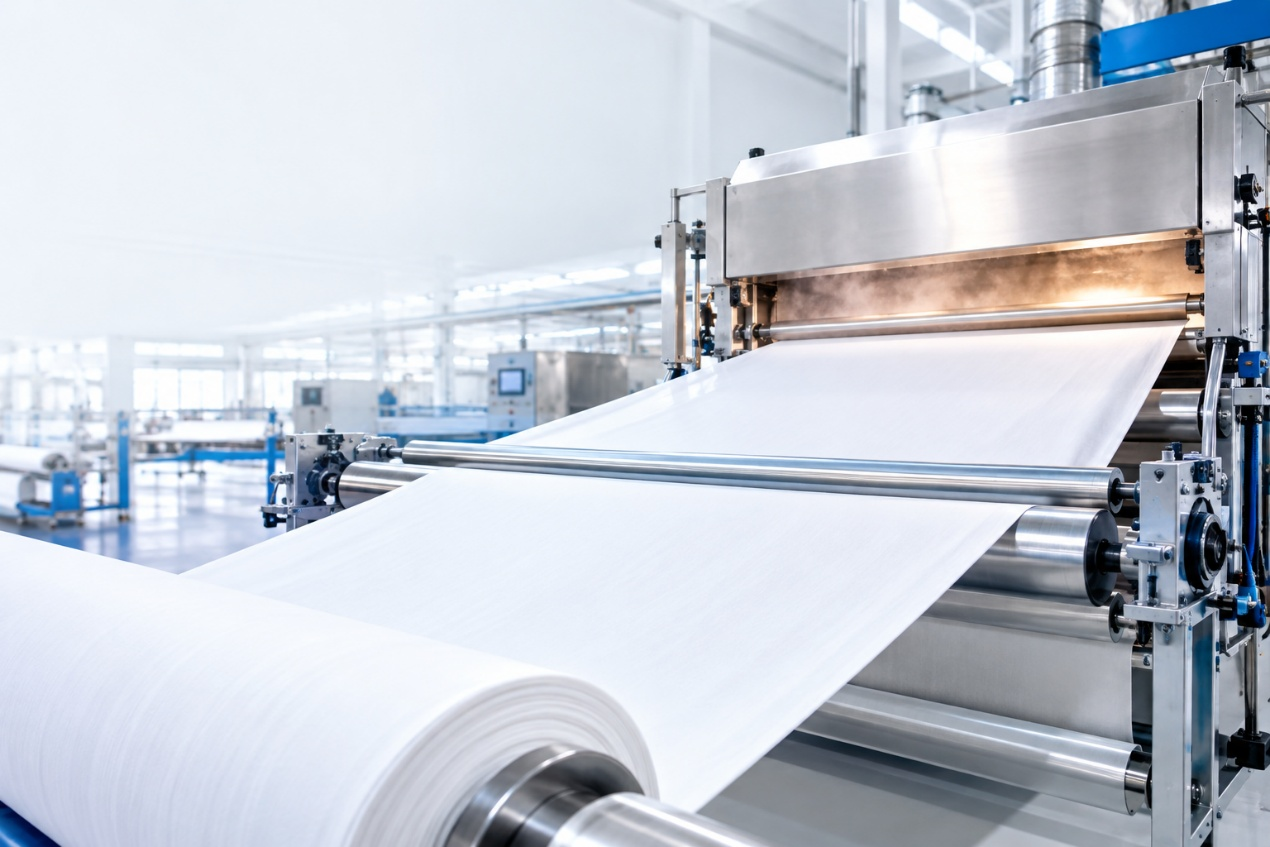
Optical Brightener for Polyester Fiber Selection
Polyester (PET) fibers and fabrics face a persistent challenge during high-temperature finishing: maintaining consistent whiteness without thermal migration, sublimation staining, or yellowing. When a stenter operates at 180–210°C, an unsuitable optical brightener for polyester fiber may lose performance, contaminate adjacent fabrics, or produce an undesirable shade change. The consequences include inconsistent CIE whiteness, reduced product quality, and costly reprocessing.
Selecting the right brightener requires more than comparing initial whiteness. Four factors should guide the decision: thermal stability and sublimation fastness, shade tone, compatibility with the application process, and performance retention after heat treatment and subsequent washing or light exposure.
This technical guide compares Shanghai Deborn’s ER-330 and EB-330, explains their publicly documented characteristics, and provides a practical framework for laboratory screening and industrial validation.
Critical Selection Criteria for Polyester Optical Brighteners
An effective optical brightener for polyester fiber must deliver the required visual whiteness while remaining compatible with the polymer substrate and downstream finishing conditions. Explore the polyester optical brightener range to identify suitable options for different textile applications.
Before choosing a product, distinguish between three performance outcomes: initial fluorescence, whiteness retained after thermal treatment, and resistance to staining during heat exposure. A bright fabric immediately after application is not necessarily the fabric that will retain the best appearance after stentering.
Thermal Stability and Sublimation Fastness under High-Temperature Stentering (180°C–210°C)
Sublimation fastness describes a brightener’s resistance to migration from the treated textile under heat, including the potential for redeposition onto adjacent materials. During stentering, excessive migration can cause local whiteness loss, staining, or variations between fabric lots.
However, sublimation and thermal decomposition are different failure mechanisms. A brightener may migrate from the fiber, while another may undergo heat-induced chemical changes that reduce fluorescence or alter its shade. In practice, both mechanisms should be evaluated.
For production lines operating at 180–210°C, assess:
- · Whiteness retention after the actual temperature and dwell time.
- · Staining on adjacent white or pale polyester fabric.
- · Changes in color coordinates and fluorescence intensity.
- · Performance consistency across different fabric constructions and production lots.
A sublimation-fastness target above grade 4–5 may be appropriate for a demanding specification, but the rating must be established using an agreed test method, temperature, exposure time, and assessment scale. The publicly available ER-330 and EB-330 product pages describe their sublimation fastness as excellent but do not publish a verified numerical grade for every test condition.
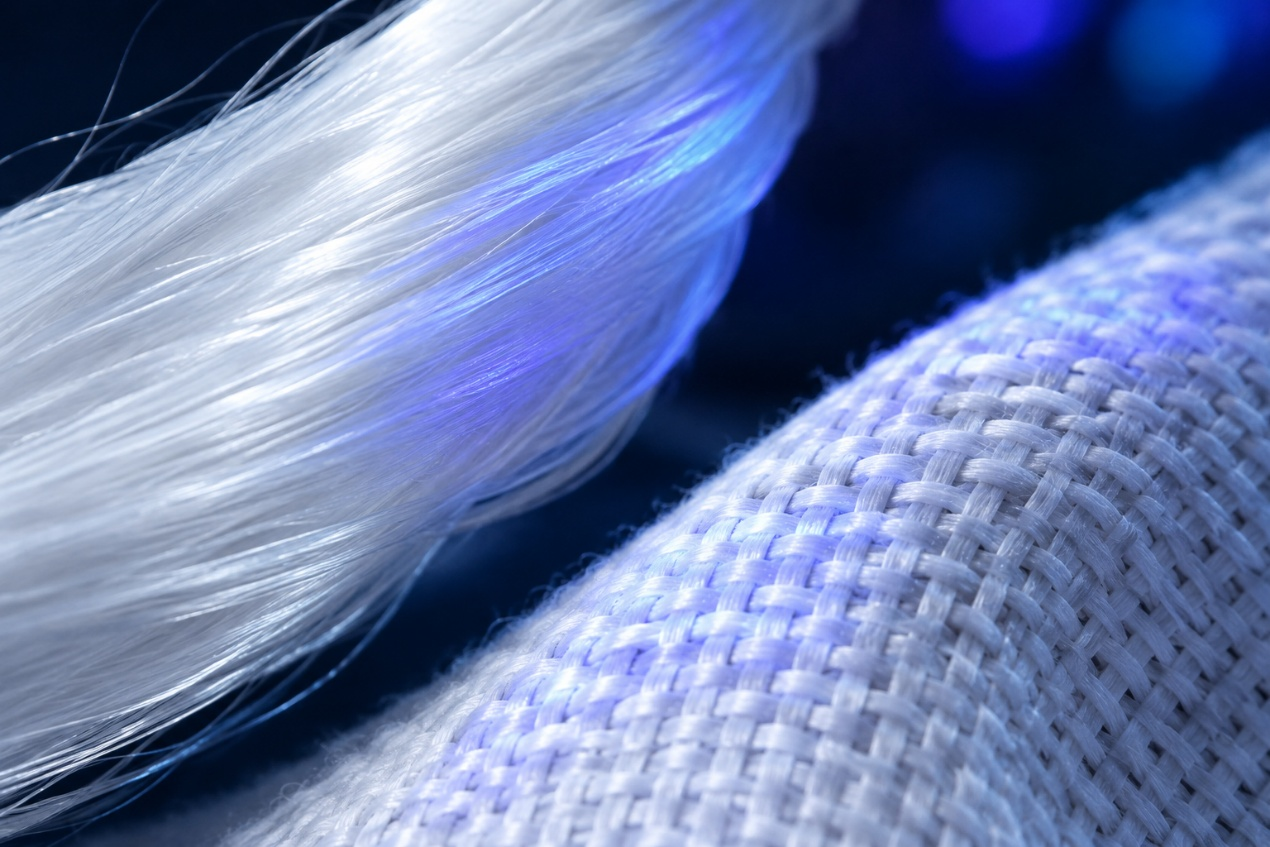
Shade Tone Selection: Greenish-Blue vs. Bluish-Violet Whiteness and CIE Whiteness Index (CIE WI)
Optical brighteners absorb ultraviolet radiation and emit visible blue-region light, partially compensating for the yellowish appearance of textile substrates. Their perceived whiteness nevertheless depends on the substrate, fluorescent emission, illumination conditions, and the observer’s visual response.
Greenish-blue, neutral-blue, and bluish-violet appearances can be useful shade targets, but these descriptions should not be assigned to a product without comparative test data.
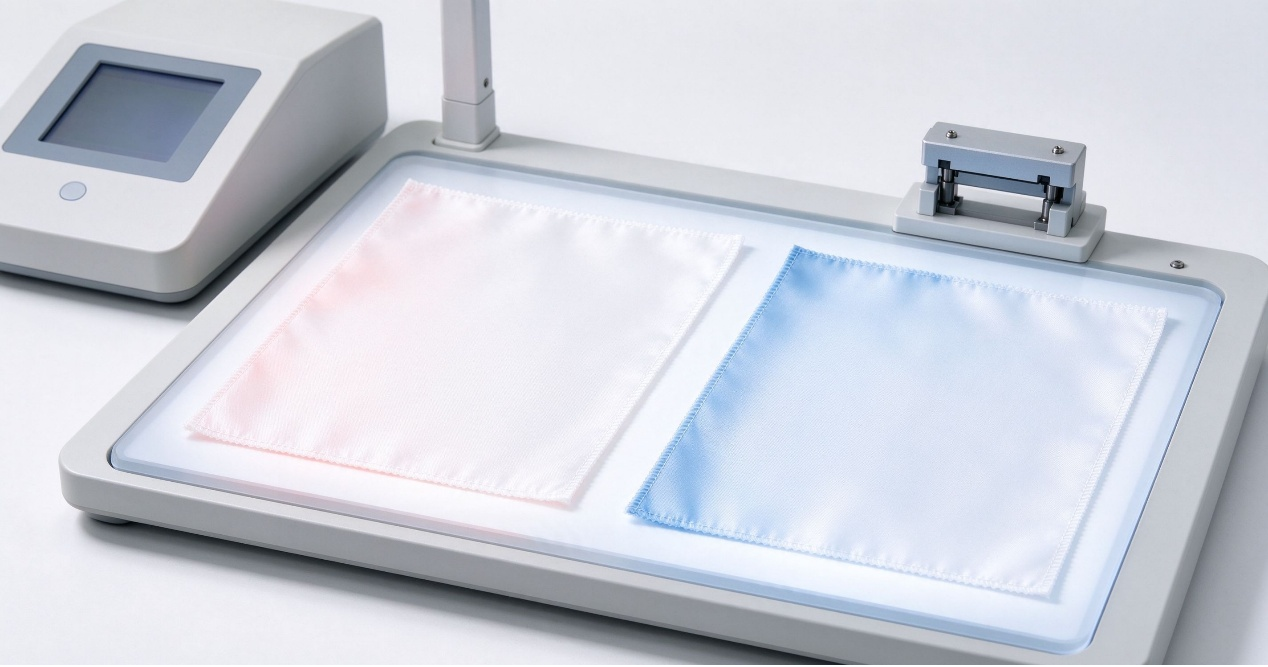
For ER-330 versus EB-330, Deborn’s published product descriptions provide a more specific starting point: ER-330 is described as producing a reddish or red-light white shade, whereas EB-330 is described as producing a blue-light white shade. These are supplier-reported shade characteristics, not a guarantee that every fabric will show the same visual difference.
Use a calibrated spectrophotometer to compare L*, a*, and b* values and CIE Whiteness Index under consistent measurement conditions. Fluorescent textiles require particular care with instrument UV calibration; otherwise, apparent differences may reflect measurement settings rather than genuine product performance.
Application Method Compatibility: High-Temperature Exhaust Dyeing (HT Dyeing) vs. Pad-Thermosol Process
The application route influences brightener exhaustion, distribution, and heat exposure.
For exhaust application, uniform dispersion and sufficient time for the brightener to interact with the PET substrate are essential. For padding, bath stability, wet pickup, drying conditions, and subsequent stentering must be controlled.
Deborn’s published recommendations for both products specify exhaust application at 100–125°C for 30–60 minutes, with a liquor ratio of 1:10–30. For padding, the recommendations specify 3–6 g/L, approximately 70% wet pickup, followed by drying and stentering at 170–190°C for 30–60 seconds.
These are useful starting conditions, but they do not establish performance at every industrial setting. In particular, a process operating at 200–210°C requires additional validation because that temperature range extends beyond the published padding window.
Chemical & Technical Comparison: ER-330 (OBA 199) vs. EB-330
ER-330 and EB-330 are both liquid, non-ionic optical brighteners intended for polyester fibers and fabrics. Both are described as having excellent sublimation fastness and good whitening performance. Their most useful documented distinction is shade direction, while their precise comparative performance must be confirmed under the intended application conditions.
| Parameter | ER-330 | EB-330 |
| Published C.I. designation | C.I. 199 | C.I. 199:1 |
| CAS number | 13001-39-3 | 13001-38-2 |
| Appearance | Light-yellow liquid | Light-yellow liquid |
| Ionic character | Non-ionic | Non-ionic |
| Published content | 24%–26% | 24%–26% |
| Reported shade | Red-light white | Blue-light white |
| Sublimation fastness | Described as excellent | Described as excellent |
| Exhaust application guide | 0.3%–0.6% owf | 0.3%–0.6% owf |
| Padding application guide | 3–6 g/L | 3–6 g/L |
Source: Deborn’s published ER-330 and EB-330 product specifications. The values above are supplier-published specifications rather than independent comparative test results.
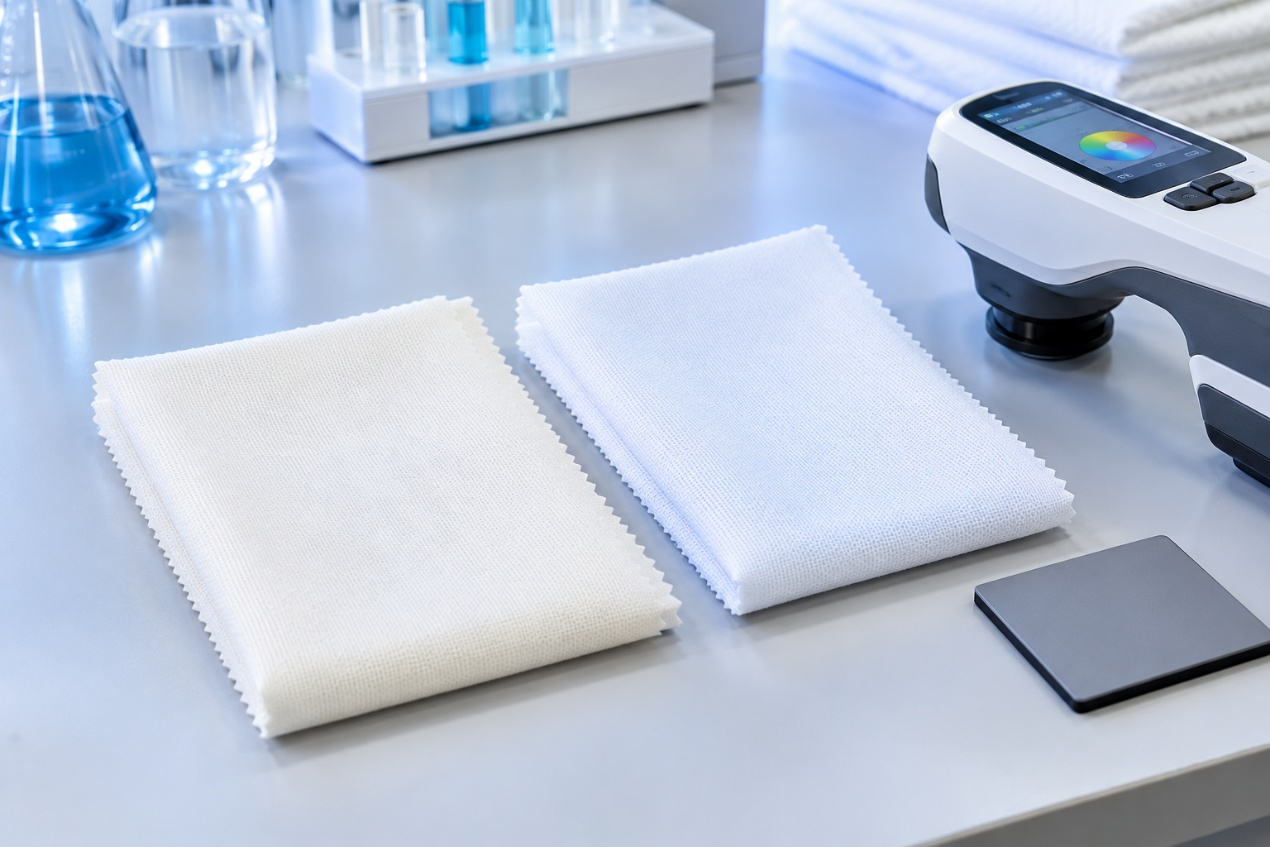
Optical Brightener ER-330: Benchmark Sublimation Resistance, High Whiteness Yield, and Leveling in Microfiber
Optical Brightener ER-330 is identified by the supplier as C.I. Fluorescent Brightener 199, with the chemical name 1,4′-bis(2-cyanostyryl)benzene, molecular formula C₂₄H₁₆N₂, and molecular weight 332.4.
Its published profile highlights strong fluorescence, a red-light white shade, and excellent sublimation fastness. These properties make it a candidate for trials where a warmer white appearance is preferred or where shade adjustment is required alongside high whiteness.
For microfiber and fine-denier polyester, assess leveling rather than assuming it from the product identity alone. Smaller fiber dimensions and variations in fabric surface area can change the apparent brightness and uniformity. Compare cross-width whiteness, fluorescence intensity, and the stability of the finished fabric after heat treatment.
The supplier describes ER-330 as suitable for polyester fiber and fabric, including use as a raw material in paste-form textile brighteners. Final suitability for a particular microfiber construction should be established through application trials.
Optical Brightener EB-330: High-Concentration Efficiency, Cost-Performance Optimization, and Shade Modulation
Optical Brightener EB-330 is listed as C.I. 199:1, CAS 13001-38-2, with a published liquid content of 24%–26%. Deborn describes its shade as blue-light white and its sublimation fastness as excellent.
EB-330 is therefore worth screening when a cooler blue-white appearance is the primary requirement. It may also be evaluated in formulations where the brightener contributes to a target hue alongside other finishing auxiliaries.
Cost-performance should be assessed on the basis of delivered performance rather than purchase price or nominal concentration alone. A useful comparison includes dosage required to reach the target CIE WI, whiteness retained after heat exposure, staining, and batch-to-batch variation.
Although both products have the same published content range, this does not prove equal fluorescence efficiency or equal optimum dosage. Their relative performance must be determined experimentally.
Light Fastness (ISO 105-B02) and Washing/Bleaching Stability Comparison
Neither product page provides a verified comparative light-fastness rating, nor does it establish that one product consistently outperforms the other in washing or bleaching stability.
Light fastness should be assessed separately using ISO 105-B02, which covers colour fastness to artificial light using a xenon-arc fading lamp and applies to optically brightened white textiles.
Washing and bleaching tests should reproduce the intended downstream chemistry. Alkalinity, oxidizing agents, surfactants, temperature, and repeated washing can affect the substrate and the observed fluorescent effect.
For procurement decisions, request actual test results under defined conditions rather than relying on general descriptions such as “excellent fastness.”
Laboratory Recipe Design & Dyehouse Trial Protocols
A controlled laboratory trial is the most reliable way to establish the correct optical brightener for polyester fiber. The goal is to identify a dosage and process window that balances initial whiteness, thermal stability, shade quality, and production cost.
Dosage Optimization (0.01%–0.05% owf) to Avoid Concentration Quenching (Fluorescence Yellowing)
Excessive brightener application does not always produce higher whiteness. At elevated concentrations, fluorescence efficiency may decline, the shade may become excessively blue or violet, or the fabric may appear dull or yellowish relative to the optimum dosage. This is commonly discussed as a concentration-quenching or over-brightening effect.
For an initial laboratory screening, evaluate 0.01%–0.05% active brightener on the weight of fabric (owf), using several intermediate concentrations rather than testing only the lowest and highest levels.
For a commercial liquid containing approximately 25% active material, this active-matter range corresponds to approximately 0.04%–0.20% commercial product on fabric weight, assuming the declared content represents the applicable active basis.
There is an important distinction between this low-dose screening range and the supplier’s published application guide. Deborn recommends 0.3%–0.6% commercial product owf for exhaust application. At 24%–26% content, that equates to approximately 0.072%–0.156% active content on fabric weight. Therefore, the 0.01%–0.05% active range should be treated as an experimental screening window, not as a replacement for the published starting recommendation.
A practical trial matrix is:
| Trial variable | Suggested approach |
| Active dosage | Screen 0.01%–0.05% owf, then extend if necessary |
| Control sample | Untreated fabric and current production standard |
| Temperature | Reproduce the actual production temperature |
| Stenter dwell time | Match the actual line residence time |
| Shade measurement | Record L*, a*, b*, and CIE WI |
| Heat assessment | Compare whiteness retention and staining |
The optimum concentration is the lowest dosage that consistently meets the required appearance and fastness specifications.
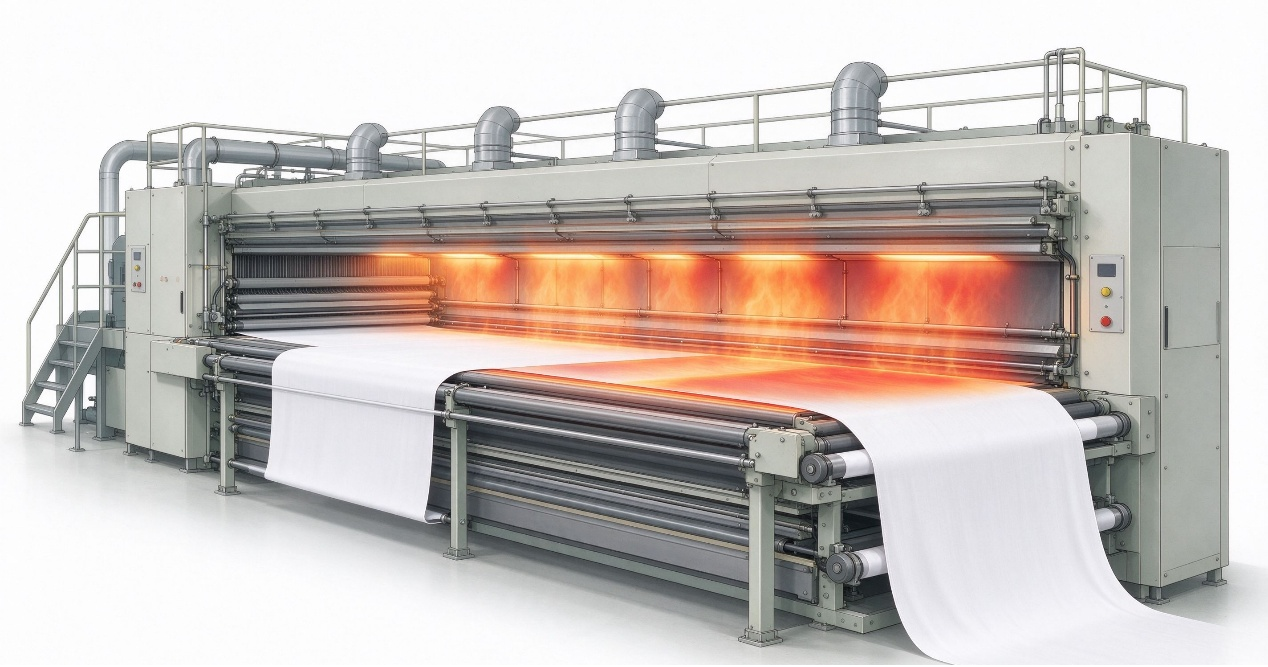
Testing Protocol: Sublimation Testing (ISO 105-P01), Color Measurement (Spectrophotometer Lab* Values)
Prepare representative polyester fabric, apply ER-330 and EB-330 under equivalent conditions, and condition the specimens before measurement. Keep fabric construction, pretreatment, bath pH, liquor ratio, pickup, drying, and heat exposure as consistent as possible.
Use ISO 105-P01 as a reference method for assessing colour fastness to dry heat, excluding pressing. It should not be described as a universal stand-alone method for every sublimation-staining scenario. Supplement the assessment with the relevant adjacent-fabric staining procedure and a controlled heat-treatment protocol that reproduces the actual stenter conditions.
For lines operating between 180°C and 210°C, consider testing representative points across the operating range. At each point, assess:
1. Whiteness retention before and after heat exposure.
2. Staining on adjacent white polyester fabric.
3. Changes in L*, a*, b*, and CIE WI.
4. Surface uniformity and visual shade under standardized illumination.
Record both the instrument results and the physical test conditions. If ER-330 delivers the preferred shade at lower dosage but EB-330 retains a more suitable blue-white appearance after heating, the final choice should reflect the intended finished-product specification rather than a single whiteness measurement.
Procurement & Quality Verification Checklist for Buyers
Industrial buyers should evaluate optical brighteners as controlled chemical inputs, not just as products with attractive initial whiteness.
Key COA Parameters: Active Content %, E1cm1% Extinction Coefficient, Particle Dispersion / Free-Flowing Liquid
Request a Certificate of Analysis (COA) and Technical Data Sheet (TDS) for the exact product grade being purchased. Important parameters include:
- · Content or active matter: Verify the specified 24%–26% range and confirm the supplier’s definition and analytical method.
- · Colour and appearance: Check for unexpected changes in liquid colour, precipitation, sediment, or separation.
- · pH: Compare with the published specification of 6.0–9.0 using the stated 10 g/L test solution.
- · Extinction coefficient (E1cm1%): Request the value, wavelength, solvent or measurement medium, and method where applicable. Do not assume that a value obtained under different conditions is directly comparable.
- · Dispersion and storage stability: Confirm that the material can be homogenized as directed and remains suitable for the intended dosing system.
The liquid appearance and concentration specifications for ER-330 and EB-330 are published on their respective product pages. However, an extinction coefficient and a comparative dispersion-stability dataset are not provided in the cited public specifications; request these details when they are relevant to the purchasing specification.
Requesting Technical Data Sheets (TDS), Lab Match Formulations, and Bulk Trial Samples
Before moving to bulk procurement, request a current TDS, applicable safety documentation, COA examples, and a laboratory sample of each candidate. Define acceptance criteria in advance, including target CIE WI, acceptable shade direction, thermal exposure, staining limit, and batch consistency.
Environmental and chemical compliance must also be assessed. REACH compliance is not established by a general product statement alone: buyers should obtain relevant composition and regulatory declarations and verify applicable restrictions for their intended market. The European Chemicals Agency explains the framework in its REACH overview.
Likewise, OEKO-TEX® STANDARD 100 is a textile-product certification system focused on testing for harmful substances; it is not automatically conferred on a textile merely because one auxiliary is used. Confirm the documentation and testing requirements applicable to the finished textile and its supply chain through the official STANDARD 100 information page.
OEKO-TEX
These checks help connect technical performance with purchasing consistency, regulatory requirements, and customer audit expectations.
Conclusion: Choosing an Optical Brightener for Polyester Fiber
The most suitable optical brightener for polyester fiber is the one that meets the required shade, whiteness retention, and thermal-fastness targets under actual production conditions.
ER-330 and EB-330 both offer a supplier-reported profile of excellent sublimation fastness, but their published shade descriptions differ: ER-330 is red-light white, while EB-330 is blue-light white. Both have a declared liquid content of 24%–26%. A definitive ER-330 vs EB-330 decision should therefore be based on matched laboratory trials, measured CIE whiteness, and heat-exposure results—not on assumed numerical fastness ratings or nominal concentration alone.
For a technical comparison tailored to your polyester fiber or fabric, request a polyester brightener sample. Share your application method, target whiteness, fabric construction, and stenter temperature profile with the Shanghai Deborn team to support a more relevant TDS review and laboratory evaluation.
Post time: Oct-28-2026